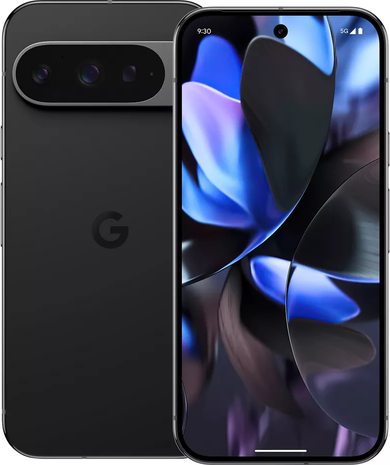
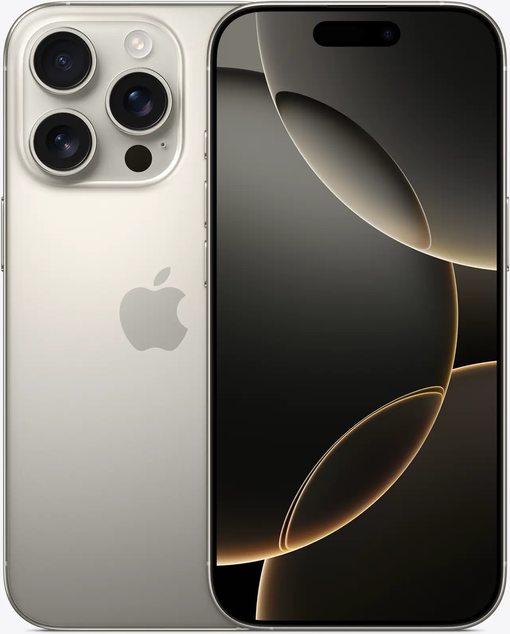
Google Pixel 9 Pro vs iPhone 16 Pro: Smart Software or Ecosystem Polish?
SpexHive Editorial
October 7, 2026
review
Same size. Same weight, to the gram. Same 6.3 inch screen. Yet these two phones could not be more different inside, and one of them hides twice the memory and a battery nearly a third bigger.
The Google Pixel 9 Pro and the iPhone 16 Pro have become the classic pick for people choosing between Google’s smart software and Apple’s ecosystem polish. We compared them line by line in the SpexHive database. Keep reading, because the specification that decides this one is not the one most people look at first.
If you want the more generous hardware, the Google Pixel 9 Pro wins on memory, battery, selfie camera and screen sharpness. If you want the faster chip, the video tools and the ecosystem, the iPhone 16 Pro is the safer pick. Both weigh exactly 199 g and fit the same hand.
Both phones use a 6.3 inch OLED screen at 120 Hz and a premium body that weighs exactly 199 g. The Pixel squeezes in more pixels, at 1280 x 2856 (about 494 ppi) against the iPhone’s 1206 x 2622 (about 460 ppi), so text looks a touch crisper on the Google phone.
Protection differs: Gorilla Glass Victus 2 on the Pixel, Ceramic Shield on the iPhone. The Pixel is a hair larger at 152.8 x 72 mm against 149.6 x 71.5 mm, and a little thicker at 8.5 mm against 8.25 mm.
Winner: Google Pixel 9 Pro, narrowly.
Round 2: Performance, raw speed against smart tricks
This round belongs to Apple on pure speed. The iPhone 16 Pro uses the A18 Pro on a 3 nm process, with six cores up to 4.04 GHz. The Google Pixel 9 Pro uses Google’s Tensor G4 on 4 nm, with eight cores up to 3.1 GHz. Apple’s chip is on a smaller process and runs at a much higher clock speed.
Google’s chip is designed with a different goal: running Google’s own AI features, from photo editing to translation, rather than winning benchmarks. It is also backed by 16 GB of RAM, double the iPhone’s 8 GB, which helps with multitasking and with keeping AI features ready in the background.
Winner: Apple for raw speed, Google for memory.
Round 3: Cameras, 42 MP selfies and a lot of similarities
The main cameras are close on paper: a 50.1 MP sensor at f/1.68 on the Pixel against a 48 MP sensor at f/1.78 on the iPhone, and both offer 5x optical zoom, optical stabilisation and 8K or 4K video (the Pixel lists 8K, the iPhone 4K).
The front camera is a different story. The Pixel’s selfie camera is a huge 42.1 MP, while the iPhone’s is 12.2 MP. If you take a lot of selfies or make video calls, that is a visible gap in detail.
Winner: Google Pixel 9 Pro on paper. Real photo tests will decide the main cameras.
Plot twist #1: a much bigger battery in the same body
Here is the number that decides it for many people. The Pixel has a 4,700 mAh battery. The iPhone has 3,582 mAh. That is roughly 31% more capacity in a phone that weighs exactly the same.
Charging is closer: 27 W wired and 21 W wireless on the Pixel, against 30 W and 25 W on the iPhone. Apple’s chip is efficient, so the real world gap in battery life may be smaller than the capacity suggests, but starting with a third more energy is a real advantage.
Plot twist #2: it comes down to the ecosystem
Strip away the numbers and you are choosing a way of living. The Pixel runs Android with Google’s own AI features at its centre, deep integration with Gmail, Maps, Photos and the Google Assistant, and a flexible, customisable home screen. The iPhone runs iOS, with seamless links to the Mac, iPad, Apple Watch and AirPods, iMessage and FaceTime, and the long list of apps that often arrive on iPhone first.
If your family, work and friends are already on one side, that decision is made for you, whatever the spec sheet says.
For the latest from each brand, look at the Google and Apple ranges, or see how today’s iPhone 18 Pro compares with last year’s.
Who should buy which?
Buy the Google Pixel 9 Pro if…
you want the bigger battery and the extra 8 GB of RAM;
you love Google’s AI features and apps;
selfies and video calls are a big part of your day.
Buy the iPhone 16 Pro if…
you use a Mac, an iPad or an Apple Watch;
you want the faster processor and Apple’s video tools;
you value a polished, consistent experience.
Quick answers
Which has the bigger battery, the Pixel 9 Pro or the iPhone 16 Pro? The Pixel 9 Pro, with 4,700 mAh against 3,582 mAh.
Do they weigh the same? Yes. Both weigh 199 g.
Which has more RAM? The Pixel 9 Pro, with 16 GB against 8 GB.
Which has the better selfie camera on paper? The Pixel 9 Pro, with 42.1 MP against 12.2 MP.
The verdict
The Google Pixel 9 Pro offers more of almost everything you can measure: memory, battery, selfie resolution and screen sharpness. The iPhone 16 Pro offers a faster chip and the world’s most polished ecosystem. Choose the Pixel for generous hardware and Google’s smarts, and the iPhone for speed and a seamless Apple life.