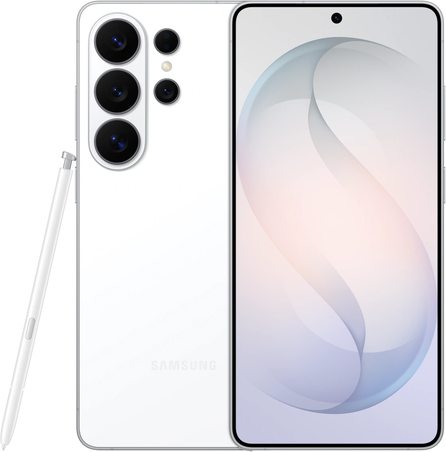
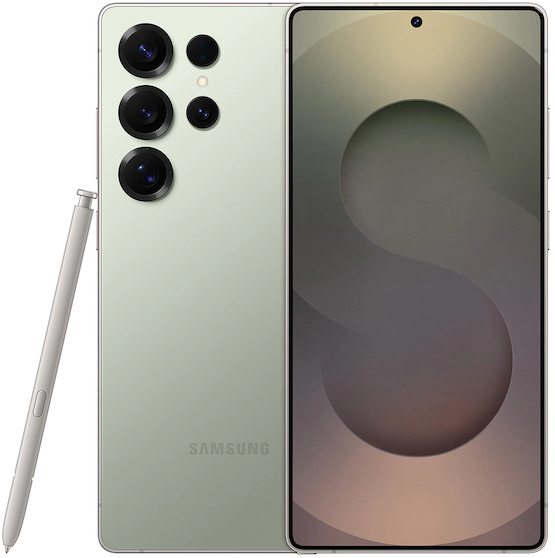
Samsung Galaxy S26 Ultra vs Galaxy S25 Ultra: Is It Worth Upgrading?
SpexHive Editorial
October 7, 2026
review
Every year the same question lands in the comments: “Should I upgrade my Ultra?” Samsung’s newest Ultra looks almost identical to last year’s, keeps the same 6.9 inch screen and even keeps the same 5,000 mAh battery. So where is the upgrade?
We compared the Galaxy S26 Ultra and Galaxy S25 Ultra line by line in the SpexHive database. The headline numbers hide three real improvements, and one place where Samsung simply did not move. Keep reading to find out whether the changes justify trading in your phone.
The Samsung Galaxy S26 Ultra is a refinement, not a revolution. It is faster, lighter, thinner, charges much quicker and has a brighter main camera lens. But the screen size, battery capacity and memory options are unchanged. If you own the Samsung Galaxy S25 Ultra, there is no urgency. If your phone is two or more years old, this is the one to buy.
Snapdragon 8 Elite Gen 5 for Galaxy (3 nm), 4.74 GHz
GPU
Adreno 830 (1200 MHz)
Adreno 840 (1300 MHz)
RAM and storage
12 or 16 GB, 256 GB to 1 TB
12 or 16 GB, 256 GB to 1 TB
Main camera
201.3 MP, f/1.7
201.3 MP, f/1.4
Zoom
5x optical
5x optical
Selfie camera
12 MP
12 MP
Battery
5,000 mAh
5,000 mAh
Wired and wireless charging
45 W and 15 W
60 W and 25 W (Qi2)
Weight
218 g
214 g
Thickness
8.2 mm
7.9 mm
Software at launch
Android 15
Android 16
Key specifications from the SpexHive database. The S25 Ultra figures are for the China, Hong Kong and Taiwan model.
Round 1: Display, a perfect copy
Put the specifications next to each other and you will not find a difference worth mentioning. Both phones use a 6.9 inch Dynamic AMOLED panel with 120 Hz, a resolution of 1440 x 3120 pixels and about 500 ppi, and both are protected by Gorilla Armor 2 glass. The screen to body ratio is very slightly higher on the S25 Ultra, at about 91.4% against 91.1%.
If you were hoping for a brighter or sharper screen, Samsung has not listed one. The upgrade is not here.
Winner: a tie.
Round 2: Performance, a modest but real step
The new phone moves from the Snapdragon 8 Elite for Galaxy to the Snapdragon 8 Elite Gen 5 for Galaxy. Both are built on a 3 nm process with eight cores, but the top clock rises from 4.47 GHz to 4.74 GHz, roughly 6%, and the graphics chip moves from the Adreno 830 at 1,200 MHz to the Adreno 840 at 1,300 MHz.
That is a useful gain for demanding games and long editing sessions, but nothing that will change everyday use. Both phones offer the same 12 GB or 16 GB of RAM and the same 256 GB, 512 GB and 1 TB storage options.
Winner: Galaxy S26 Ultra, by a small margin.
Round 3: Cameras, a brighter lens and little else
Both phones lead with a 201.3 MP main sensor with optical stabilisation, laser autofocus and 5x optical zoom, and both record video up to 8K. The selfie camera is a 12 MP unit on each.
The one change that stands out in our database is the main lens aperture: f/1.4 on the S26 Ultra against f/1.7 on the S25 Ultra. A wider aperture lets in more light, which should help low light photos and give a shallower depth of field in portraits. How much it matters will depend on Samsung’s image processing, so wait for real photo tests before you rely on it.
Both phones carry a 5,000 mAh battery, which is the number that disappoints many buyers. What changes is how quickly you refill it. The S26 Ultra supports 60 W wired charging against 45 W, and 25 W wireless charging with Qi2 against 15 W. That is a third faster by wire and two thirds faster wirelessly.
For a phone you charge every day, shaving minutes off each top up adds up. For anyone who wanted a bigger battery, there is no change. Compare that with the Xiaomi 18 Pro Max, which fits 8,500 mAh into a similar body.
Plot twist #2: lighter and thinner, quietly
Samsung trimmed the body without saying much about it. The S26 Ultra weighs 214 g against 218 g and measures 7.9 mm against 8.2 mm in thickness. Those 4 g and 0.3 mm are small numbers, but together they make a large phone feel a touch less bulky in the hand. The dimensions are otherwise almost identical, at 163.6 x 78.1 mm against 162.8 x 77.6 mm.
The software side moves up as well, with Android 16 at launch against Android 15, which usually means a longer period of updates ahead.
Should you upgrade?
Upgrade to the Galaxy S26 Ultra if…
you own an S23 Ultra or older and want a big leap in speed, charging and battery efficiency;
fast wireless charging matters to you;
you can get a strong trade in offer on your old phone.
Keep your Galaxy S25 Ultra if…
you are happy with its performance and camera;
you do not charge wirelessly very often;
you would rather wait for a bigger change in a future model.
Is the Galaxy S26 Ultra faster than the Galaxy S25 Ultra? Yes, a little. The top CPU speed rises from 4.47 GHz to 4.74 GHz and the GPU from Adreno 830 to Adreno 840.
Is the battery bigger? No. Both have 5,000 mAh.
Does it charge faster? Yes. 60 W wired and 25 W wireless, against 45 W and 15 W.
Is the screen better? No. The specifications are the same: 6.9 inches, 1440 x 3120 and 120 Hz.
The verdict
The Samsung Galaxy S26 Ultra is a better phone than the Samsung Galaxy S25 Ultra, but only in a handful of ways: charging speed, processor, a wider aperture main lens and a slightly slimmer body. If your current Ultra works well, keep it. If you are coming from anything older, the gains stack up quickly.