The Battery Giants: How the Xiaomi 18 Pro Max Leaves Standard Flagships Behind
SpexHive Editorial
October 7, 2026
review
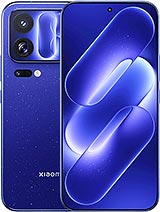
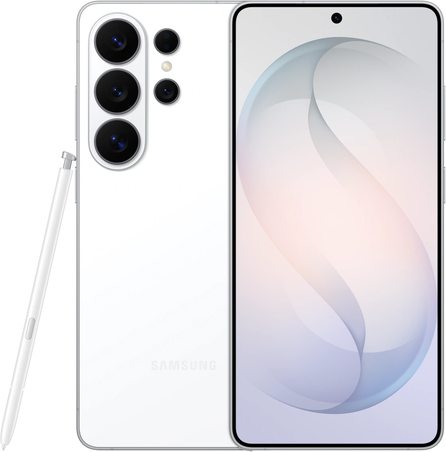
For years, flagship phones have been stuck around 5,000 mAh. It became an unwritten limit, as if physics said no. Then the Xiaomi 18 Pro Max arrived with 8,500 mAh, a battery 70% bigger than a Galaxy S26 Ultra’s, in a body that weighs only a few grams more.
How is that possible, and what does it mean for the phone in your pocket? We pulled the battery figures for the biggest flagships in the SpexHive database and did the maths. One number, which we call the mAh per gram, shows the real story. Keep reading to see it.
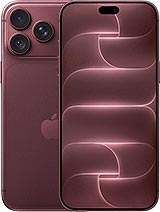
The Xiaomi 18 Pro Max packs 8,500 mAh thanks to a silicon carbon battery, a design that stores more energy in the same space than the older graphite design used in most phones. The result is a phone that holds 58% more charge than the iPhone 18 Pro Max and 70% more than the Galaxy S26 Ultra, and still weighs only 235 g to 240 g.
Raw capacity can fool you, because a bigger phone can simply hold a bigger battery. So we divided each phone’s battery by its weight to see how much energy it fits in every gram.
The Xiaomi 18 Pro Max stores about 35 to 36 mAh in every gram of phone.
The Xiaomi 18 Pro manages about 34 mAh per gram.
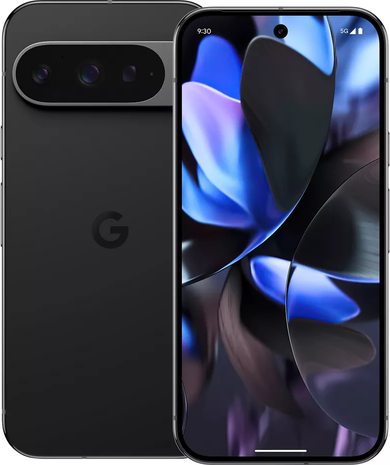
The Pixel 9 Pro manages about 24, the Galaxy S26 Ultra about 23 and the iPhone 18 Pro Max about 22.
The iPhone 16 Pro manages about 18.
In other words, Xiaomi packs roughly 50% more battery per gram than the best of the standard flagships. That is not a small optimisation. It is a different technology.
What silicon carbon actually changes
Most phone batteries use graphite at one electrode. Silicon can hold far more lithium than graphite, but it swells as it charges, so for years it was hard to use. Silicon carbon batteries mix the two materials so the cell gains capacity without breaking itself apart. Our database lists the Xiaomi 18 Pro Max, the Xiaomi 18 Pro and the Xiaomi 18 Fold with silicon carbon cells, at 8,500 mAh, 7,000 mAh and 6,000 mAh.
The benefit is clearest in thin, light phones. The Xiaomi 18 Pro Max is 8.4 mm thick, thinner than the iPhone 18 Pro Max at 8.8 mm, yet its battery is more than 3,000 mAh bigger.
A huge battery would be annoying if it took all night to fill. Xiaomi pairs it with 100 W wired charging, 50 W wireless charging and even 27 W reverse wireless charging for accessories. The Galaxy S26 Ultra supports 60 W wired and 25 W wireless. The iPhone 18 Pro Max charges to 50% in 15 minutes over a wire with 25 W wireless through MagSafe and Qi2. The Pixel 9 Pro lists 27 W wired and 21 W wireless.
Fast charging matters most when a battery is large. Adding 3,000 mAh without adding speed would simply mean waiting longer.
Here is the honest part. A bigger battery does not automatically mean longer life, because screen brightness, chip efficiency and software all matter. Our testing gives a useful reference for Apple: the iPhone 18 Pro Max reached an active use score of 19 hours 20 minutes and a 62 hour endurance rating on its EU energy label, which is excellent for a 5,391 mAh battery.
We do not have matching lab results for the Xiaomi 18 Pro Max yet, so we cannot say exactly how long its battery lasts. With 58% more capacity, it should comfortably last longer unless its software is far less efficient. We will update this article as soon as we have tested it.
Who gains the most from a battery giant?
Frequent travellers who cannot rely on a charger for two days.
Gamers and video watchers who drain a standard battery by the afternoon.
How big is the Xiaomi 18 Pro Max battery? 8,500 mAh, silicon carbon.
How does it compare with an iPhone 18 Pro Max? It holds about 58% more charge than the 5,391 mAh iPhone, and it is also thinner.
What is a standard flagship battery? Around 5,000 mAh, as in the Galaxy S26 Ultra.
Does a bigger battery take longer to charge? Not necessarily. The Xiaomi 18 Pro Max charges at 100 W by wire.
The verdict
The 5,000 mAh ceiling was never physics. It was a manufacturing choice. The Xiaomi 18 Pro Max proves a flagship can hold 8,500 mAh without becoming a brick, and it makes the standard flagships look conservative. Expect other makers to follow, and expect battery size to become the first number buyers check.
Until then, if battery life is your top priority, no phone in our database offers more.
Is battery life your number one priority? Tell us in the comments below.