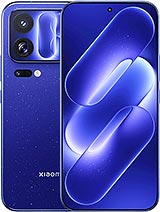
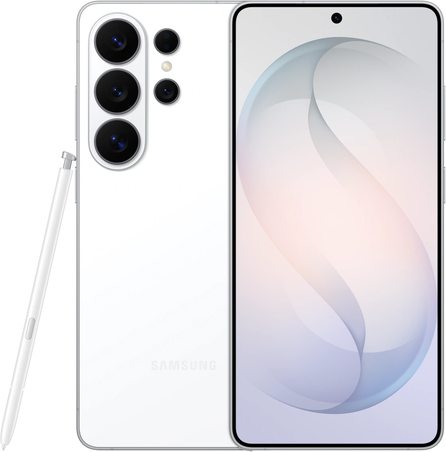
Xiaomi 18 Pro Max vs Samsung Galaxy S26 Ultra: The Battle of the Android Giants
SpexHive Editorial
October 7, 2026
review
Samsung had a six month head start. Xiaomi arrived late with a newer chip, a battery that is 70% bigger and a second screen on the back of the phone. If you want the best Android flagship money can buy this autumn, which one do you choose?
We compared every line of both spec sheets in the SpexHive database. The answer depends on what you value most, but one of these phones wins far more rounds than the other. Keep reading to see which, and to find the one area where Samsung still wins by a wide margin.
If you want endurance, charging speed and the newest hardware, the Xiaomi 18 Pro Max is the stronger phone on paper. If you want a sharper screen, a lighter body and Samsung’s polish and update reputation, the Samsung Galaxy S26 Ultra remains an excellent choice and has been on sale for months.
Key specifications from the SpexHive database. Prices vary by country.
Round 1: Display, Samsung’s home turf
Both phones have a 6.9 inch, 120 Hz panel, but the specifications tell different stories. Samsung packs 1440 x 3120 pixels (about 499 ppi) against Xiaomi’s 1208 x 2624 (about 418 ppi). That is a visible gap if you look closely at small text.
Xiaomi counters with a 4,000 nit peak brightness, an extreme 2,160 Hz PWM dimming rate for comfort in dim rooms, Dolby Vision and HDR Vivid support. Samsung’s brightness figure is not listed in our database.
Winner: Samsung for sharpness, Xiaomi for brightness. Slight edge to Samsung for most eyes.
Round 2: Performance, a newer generation against a proven one
Here Xiaomi’s later launch pays off. The Xiaomi 18 Pro Max uses the Snapdragon 8 Elite Extreme Gen 6 on a 2 nm process, with eight cores and a prime core at 5.01 GHz. The Samsung Galaxy S26 Ultra uses the Snapdragon 8 Elite Gen 5 for Galaxy on 3 nm, with a top speed of 4.74 GHz.
That is a full chip generation and a smaller manufacturing process in Xiaomi’s favour. Samsung’s version is tuned for its phones, so real world differences may be smaller than the numbers suggest. We do not have benchmark results for either phone yet, so we will update this article when we do.
Winner: Xiaomi on paper.
Round 3: Cameras, 5x zoom against bigger sensors
Both phones lead with a main sensor of around 200 MP. Samsung’s opens wider at f/1.4 (Xiaomi’s is f/1.7), which should help in low light. Samsung also gives you four rear cameras, including a 10 MP telephoto and a 49.9 MP periscope with 5x optical zoom, plus a 50.3 MP ultra wide.
Xiaomi uses three cameras: the 200 MP main, a 200 MP periscope telephoto at 3.2x with a large 1/1.56 inch sensor, and a 50 MP ultra wide. Leica lenses and laser autofocus are listed. On the front, Xiaomi’s 50 MP selfie camera leaves Samsung’s 12 MP far behind.
Winner: Samsung for zoom reach, Xiaomi for selfies and sensor size. A draw until real photo tests land.
The Xiaomi 18 Pro Max carries an 8,500 mAh silicon carbon battery. The Samsung Galaxy S26 Ultra has 5,000 mAh. That is 70% more capacity in a phone that weighs only 21 to 26 g more.
Charging widens the gap further. Xiaomi supports 100 W wired, 50 W wireless and 27 W reverse wireless. Samsung manages 60 W wired and 25 W wireless with Qi2. Even if Samsung’s software is more efficient, it is very hard to close a gap this large.
Winner: Xiaomi by a distance.
Plot twist #2: what Xiaomi adds that Samsung does not
Under the display specifications, the Xiaomi lists a 2.9 inch rear display (596 x 976 pixels, 120 Hz, 4,000 nits). It is the kind of feature that sounds like a gimmick until you use it for notifications, a camera viewfinder or music controls without turning the phone over.
Add three speakers with Dolby Atmos, an infrared blaster and an ultrasonic under display fingerprint sensor, and you can see where Xiaomi spent its engineering budget. Samsung’s case rests on refinement, a sharper screen, a thinner body (7.9 mm against 8.4 mm) and a lighter one.
Price and availability
The Xiaomi 18 Pro Max is listed at about €920. Our database lists the Samsung Galaxy S26 Ultra at 2,199 without recording a currency, so check your local store for a fair comparison. The Samsung has been on sale since March, which also means discounts are easier to find than on a phone that launched this week.
One last consideration is software support and local service. Samsung’s presence in shops and service centres is far broader in most countries, which matters if something goes wrong.
Who should buy which?
Buy the Xiaomi 18 Pro Max if…
battery life and charging speed come first;
you want the newest chip and the most unusual extras;
you take lots of selfies and want a 50 MP front camera.
Buy the Samsung Galaxy S26 Ultra if…
you want the sharpest screen and the longest zoom;
you prefer a lighter, thinner phone;
local support and the chance of a discount matter to you.
Which has the bigger battery, Xiaomi 18 Pro Max or Galaxy S26 Ultra? The Xiaomi, with 8,500 mAh against 5,000 mAh.
Which charges faster? The Xiaomi, with 100 W wired and 50 W wireless against Samsung’s 60 W and 25 W.
Which screen is sharper? The Samsung, at about 499 ppi against about 418 ppi.
Which phone is newer? The Xiaomi 18 Pro Max, released in September 2026. The Galaxy S26 Ultra was released in March 2026.
The verdict
On the numbers, the Xiaomi 18 Pro Max wins the battery, charging, chip, selfie camera and extras rounds, while the Samsung Galaxy S26 Ultra takes display sharpness, zoom range, weight and thickness. For most people who simply want a phone that lasts, the Xiaomi is the smarter buy. For those who value refinement and a trusted local brand, Samsung is still hard to fault.