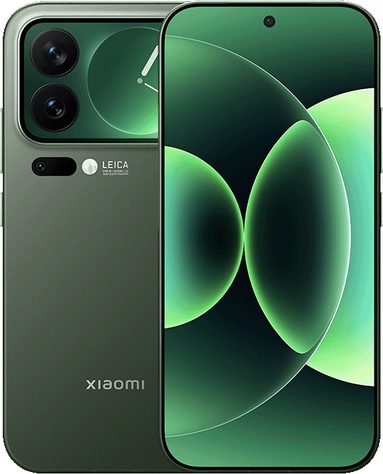
Xiaomi 18 Pro vs Xiaomi 17 Pro: One Year, One Big Leap
SpexHive Editorial
October 7, 2026
review
Xiaomi does not do small upgrades. A year after the 17 Pro arrived, its successor leaps from a 50 MP main camera to 200 MP, adds a screen on the back and packs a battery that is 700 mAh bigger into a phone that is only a few grams heavier.
We lined both phones up in the SpexHive database. Some of these changes will matter to you every day, and one of them barely matters at all. Keep reading to find out which is which before you spend a cent.
The Xiaomi 18 Pro is a clear step up from the Xiaomi 17 Pro: a newer 2 nm chip, a much higher resolution camera system, a 7,000 mAh battery and a second screen. If you own the 17 Pro and your camera or battery frustrates you, the upgrade makes sense. If you are happy with what you have, there is no rush.
Key specifications from the SpexHive database. The 17 Pro figures are for the China model.
Round 1: Display and the screen on the back
The new phone has a slightly larger 6.4 inch panel against 6.3 inches, and the resolution actually drops a little, from 1220 x 2656 to 1120 x 2436. In sharpness terms that is about 419 ppi against 464 ppi, so the older phone is crisper on paper.
Brightness and eye comfort run the other way. The 18 Pro lists a 4,000 nit peak, Dolby Vision, HDR Vivid and a 2,160 Hz PWM dimming rate. Our database does not list brightness or dimming figures for the 17 Pro, so we cannot confirm how it compares.
The standout addition is a 2.7 inch rear display with its own 120 Hz panel and 4,000 nit peak. It is listed on the 18 Pro and not on the 17 Pro.
Winner: Xiaomi 18 Pro, for the rear screen and the brightness specification.
Round 2: Performance, a full generation in one year
The Xiaomi 17 Pro uses the Snapdragon 8 Elite Gen 5 on 3 nm with an octa core CPU peaking at 4.61 GHz. The Xiaomi 18 Pro moves to the Snapdragon 8 Elite Gen 6 on 2 nm, with an octa core CPU listed at up to 5 GHz. That is roughly 8% more clock speed and a smaller manufacturing process that should help efficiency.
Memory choices are strong on both: up to 16 GB of RAM and 1 TB of storage, and the new phone confirms UFS 4.1 storage. We do not have benchmark results for either phone, so we will not claim a percentage.
Winner: Xiaomi 18 Pro.
Round 3: Cameras, the biggest jump of all
This is where the generational leap is largest. The 17 Pro’s main camera is a 50.3 MP sensor at f/1.67. The 18 Pro’s is a 200 MP sensor at f/1.7 with a large 1/1.28 inch size, dual pixel autofocus and optical stabilisation. A second 200 MP periscope camera with a 1/1.56 inch sensor handles zoom at 3.2x, and a 50 MP ultra wide covers 102 degrees.
Video also improves to 8K at 30 fps and 4K at up to 120 fps with Dolby Vision, while the 17 Pro lists 8K in general terms without frame rates. The selfie camera stays at about 50 MP on both.
Remember that megapixels alone do not make a better photo. But a larger sensor, a 200 MP periscope and stabilised lenses together are a real hardware upgrade.
The battery grows from 6,300 mAh to 7,000 mAh, an increase of about 11%. The weight rises from 192 g to about 203 to 208 g, so you pay roughly 11 to 16 g for the extra capacity. The body is also 0.5 mm thicker, at 8.5 mm against 8 mm.
Charging speed does not change: 100 W wired and 50 W wireless on both. The 18 Pro also lists 27 W reverse wireless charging, handy for earbuds and watches. Either phone can fill a battery from empty remarkably fast.
Plot twist #2: the 17 Pro is the lighter, smaller phone
We usually celebrate bigger, better specifications, but here is a reminder that smaller has value. At 192 g the 17 Pro is noticeably lighter than the 18 Pro, and slightly shorter and slimmer in every dimension (151.1 x 71.8 x 8 mm against 151.8 x 72 x 8.5 mm). If you value a phone that disappears in your pocket, the older model has a quiet advantage.
The 18 Pro is also IP68 rated against dust and water immersion up to 6 metres for 30 minutes, though our database does not list a rating for the 17 Pro model, so check before you rely on it near water.
Price
The Xiaomi 18 Pro is listed at about €790. Our database lists the 17 Pro at ¥4,999 for the China edition, so a direct conversion would be misleading. What matters is the second hand market: a one year old flagship almost always loses a good chunk of its value, so if you are buying rather than upgrading, a discounted 17 Pro can be tempting.
Should you upgrade?
Upgrade to the Xiaomi 18 Pro if…
camera quality and zoom are what you want to improve;
you want a bigger battery and a screen on the back;
you can sell your 17 Pro for a fair price.
Stay with the Xiaomi 17 Pro if…
you are happy with its camera and battery life;
you want the lighter, smaller body;
you would rather save your money for next year.
Looking for something bigger? Check the Xiaomi 18 Pro Max with its 8,500 mAh battery, or browse every model from Xiaomi.
Quick answers
How much bigger is the Xiaomi 18 Pro battery? 7,000 mAh against 6,300 mAh, an increase of about 11%.
Does the Xiaomi 18 Pro have a better camera? Yes. It has a 200 MP main camera and a 200 MP periscope, against a 50 MP main camera on the 17 Pro.
Is the charging faster? No. Both support 100 W wired and 50 W wireless charging.
Which chip is newer? The Snapdragon 8 Elite Gen 6 on 2 nm in the 18 Pro, against Gen 5 on 3 nm in the 17 Pro.
The verdict
The Xiaomi 18 Pro is a worthwhile successor, and the camera system is the main reason. The battery, chip and rear screen add up to a phone that feels a generation ahead. The Xiaomi 17 Pro stays a very capable, lighter alternative, especially at a discount.