Compare / Mate 80 RS Ultimate Design vs Huawei Mate 90
Mate 80 RS Ultimate Design vs Huawei Mate 90
A side-by-side comparison of the Mate 80 RS Ultimate Design and the Huawei Mate 90, covering display, chipset, memory, camera, battery and build.
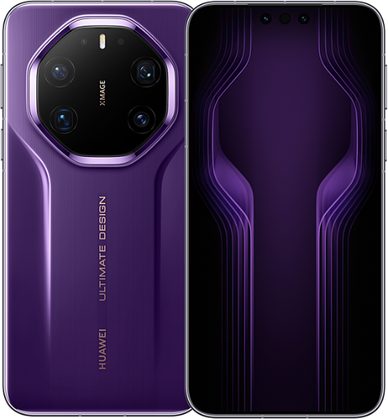

Overview
Specifications
Mate 80 RS Ultimate Design
- Technology
- GSM / HSPA / LTE
- 2G bands
- GSM 850 / 900 / 1800 / 1900
- 3G bands
- UMTS 2100 / 1900 / 1700/2100 / 850 / 800 / 900 / 800 - HSUPA, HSUPA 5.8, HSDPA, HSPA+ 21.1, TD-HSDPA
- 4G bands
- LTE bands 1, 2, 3, 4, 5, 6, 7, 8, 9, 12, 17, 18, 19, 20, 26, 28, 34, 38, 39, 40, 41, 42, 66 - 100/50, 150/50, 300/50, 300/75, 400/150, 450/50, 450/100, 600/50, 600/100, 1000/100, 1200/200, 1400/300 data links
- Dual SIM
- SIM2 supports same bands as SIM1
Huawei Mate 90
- Technology
- GSM / HSPA / LTE / 5G
- 2G bands
- GSM 850 / 900 / 1800 / 1900
- 3G bands
- HSDPA 800 / 850 / 900 / 1700(AWS) / 1900 / 2100
- 4G bands
- LTE
- 5G bands
- SA/NSA
- Speed
- HSPA, LTE, 5G
Mate 80 RS Ultimate Design
- Announced
- 2025 Nov 24
- Status
- Available. Released 2025 Nov 28
Huawei Mate 90
- Announced
- 2026, October 01
- Status
- Available. Released 2026, October 01
Mate 80 RS Ultimate Design
- Dimensions
- 164.4 × 79 × 8.25 mm
- Weight
- 249 g
- Build
- Yes
- SIM
- e-SIM + Nano-SIM (4FF)
- Protection
- IP69 dust/water resistant (600 cm, 30 min)
- Extras
- Haptic touch feedback
Huawei Mate 90
- Dimensions
- 161.9 x 75.7 x 8 mm (6.37 x 2.98 x 0.31 in)
- Weight
- 217 g (7.65 oz)
- Build
- Glass front (Kunlun Glass 3), aluminum frame, glass-fiber reinforced plastic back
- SIM
Nano-SIM + Nano-SIM + eSIM + eSIM (max 2 at a time)
IP68/IP69 dust tight and water resistant (high pressure water jets; immersible up to 6m for 30 min)
Mate 80 RS Ultimate Design
- Type
- AM-OLED display, 1073.7M colors, 120 Hz
- Size
- 6.8 inches
- Resolution
- 1320x2848 pixels (~465 PPI density), ~86.4% screen-to-body ratio
- Protection
- Yes
- Touch
- Capacitive multi-touch screen
- Notch/Hole
- 3-hole
Huawei Mate 90
- Type
- LTPO OLED, 1B colors, 120Hz, 1440Hz PWM, HDR Vivid
- Size
- 6.75 inches, 110.3 cm2 (~90.0% screen-to-body ratio)
- Resolution
- 1280 x 2832 pixels (~460 ppi density)
- Protection
- Huawei Kunlun Glass 3
Mate 80 RS Ultimate Design
- OS
- Huawei HarmonyOS 6
- Chipset
- HiSilicon KIRIN9030 Pro 4G Hi36D0 GFCV100 6 nm
- CPU
- 2.75 GHz multi-core
- GPU
- HiSilicon Maleoon 935
Huawei Mate 90
- OS
- HarmonyOS 7.0
- Chipset
- Kirin 9030
Mate 80 RS Ultimate Design
- Card slot
- No
- Internal
- 1TB 20GB RAM, 512GB 20GB RAM
- Interface
- UFS 4.0
Huawei Mate 90
- Card slot
- No
- Internal
- 256GB 12GB RAM, 512GB 12GB RAM, 1TB 12GB RAM
Mate 80 RS Ultimate Design
- Quad
50.3 MP, f/1.40, 24mm, 5.8 x optical zoom, BSI CMOS, CD AF, PD AF, Laser AF, EIS, EIS (video), OIS, OIS (video), Pixel unification, HDR photo, HDR video, Red-eye reduction, Slow motion video, Burst mode, Refocus, Touch focus, Macro mode, Panorama Photo, Face detection, Face tagging, Smile detection, Face retouch, Face retouch (video), Intelligent scene detection
39.9 MP, f/2.20, 13mm, (ultrawide), BSI CMOS, PD AF, EIS, EIS (video), Pixel unification, HDR photo, HDR video, Slow motion video, Burst mode, Touch focus, Macro mode, Panorama Photo, Face detection, Face tagging, Smile detection, Face retouch, Face retouch (video), Intelligent scene detection
50.3 MP, f/2.10, 90.5mm, (telephoto), BSI CMOS
15.9 MP, f/3.40, 140mm, (periscope), BSI CMOS
- Other features
- dual LED flash
- Video
- 3840x2160 pixel
- Aperture (T)
- f/4.00
Huawei Mate 90
- Triple
50 MP, f/1.4-f/4.0, 24mm (wide), PDAF, OIS
50 MP, f/2.2, 88mm (telephoto), PDAF, OIS, 4x optical zoom
40 MP, f/2.2, 13mm, 120˚ (ultrawide), PDAF
- Features
- Laser AF, color spectrum sensor, LED flash, panorama, HDR
- Video
- 4K, 1080p, gyro-EIS, OIS, HDR Vivid
Mate 80 RS Ultimate Design
- Dual
13.0 MP, f/2.00, BSI CMOS, PD AF, EIS, EIS (video), HDR photo, HDR video, Slow motion video, Burst mode, Panorama Photo, Face detection, Face tagging, Smile detection, Face retouch, Face retouch (video), Intelligent scene detection
CMOS sensor (depth/mono)
- Video
- 3840x2160 pixel
Huawei Mate 90
- Single
13 MP, f/2.0, 18mm (ultrawide), AF
TOF 3D, (depth/biometrics sensor)
- Features
- HDR
- Video
- 4K, 1080p@30/240fps, HDR Vivid, gyro-EIS
Mate 80 RS Ultimate Design
- Loudspeaker
- stereo
- 3.5mm jack
- No
- Audio features
- Voice speakerSpeakerphoneANCHD VoiceVoLTEViLTE
Huawei Mate 90
- Loudspeaker
- Yes, with stereo speakers
- 3.5mm jack
No
High-definition audio
Mate 80 RS Ultimate Design
- WLAN
- 802.11a, 802.11b, 802.11g, 802.11n, 802.11ac, 802.11ax, 802.11be
- Bluetooth
- Bluetooth 6.0
- Positioning
- Simultaneous GPSA-GPSDual-frequency GPSGeotaggingQuickGPSQZSSNavIC
- Satellite details
- GLONASS (L1OF); Galileo (E1, E5a, E5b); BeiDou (B1c, B1I, B2a, B2b, BDS Voice Call, BDS SMS BeiDou receiver)
- NFC
- Yes
- USB
- USB C reversible USB 3.0 / 3.1 Gen 1 / 3.2 Gen 1x1
- USB features
- USB chargingUSB fast chargingUSB HostUSB OTG 1.3USB OTG 2.0USB PDUSB PD 2.0USB PD 3.0USB PD 3.1
- Wireless features
- Miracast, Wi-Fi Direct, Wi-Fi Tethering, Wi-Fi Calling
- IR
- Yes
- Supported Tiantong satellite services
- Tiantong Voice CallTiantong SMS Tiantong module
Huawei Mate 90
- WLAN
- Wi-Fi 802.11 a/b/g/n/ac/6/7, dual-band, Wi-Fi Direct
- Bluetooth
- 6.0, A2DP, LE, L2HC
- Positioning
- GPS (L1+L5)GLONASS (L1)BDS (B1I+B1c+B2a+B2b)GALILEO (E1+E5a+E5b)QZSS (L1+L5)NavIC
- NFC
- Yes
- Infrared port
- Yes
- Radio
- No
- USB
- USB Type-C 3.1, OTG, DisplayPort 1.2
Mate 80 RS Ultimate Design
- Sensors
- AccelerometerGyroCompassAltimeterBarometerFP sensorHallL sensorP sensorStep counterNFC
- Software
- Voice CommandNavigation softwareAugmented Reality (AR)Intelligent personal assistantVoice RecognitionFace Recognition
Huawei Mate 90
- Sensors
Face ID, fingerprint (side-mounted), accelerometer, gyro, proximity, compass, barometer, altimeter
BDS Satellite Calling and Messaging - China only
Mate 80 RS Ultimate Design
- Type
- 6000 mAh battery Li-ion polymer (LiPo)
- Charging
- 100.0 W charging wired, 80.0 W wireless (Qi, Qi reverse)
Huawei Mate 90
- Type
- 6600 mAh
- Charging
66W wired
50W wireless
Reverse wireless
5W reverse wired
Mate 80 RS Ultimate Design
- Models
- Mate 80 RS Ultimate Design Dual SIM TD-LTE CN 512GB SGU-AL10
- Price
- ¥11,999
- Market
- Asia, Southeast Asia
- Countries
- China, HK
Huawei Mate 90
- Colors
- Black, White, Green, Pink
- Models
- HLS-AL00
- Price
- About 790 EUR
How the Mate 80 RS Ultimate Design and Huawei Mate 90 differ
- The Huawei Mate 90 has a larger battery, 6600 mAh against 6000 mAh on the Mate 80 RS Ultimate Design.
- The Mate 80 RS Ultimate Design has the bigger screen, 6.8 inches against 6.75 inches.
- The Mate 80 RS Ultimate Design offers more RAM, up to 20 GB against 12 GB.
- The main cameras are 50.3 MP on the Mate 80 RS Ultimate Design and 50 MP on the Huawei Mate 90.
- The Huawei Mate 90 is the newer of the two, released in October 2026.