Compare / Nokia 2.4 vs 300 Charge
Nokia 2.4 vs 300 Charge
A side-by-side comparison of the Nokia 2.4 and the 300 Charge, covering display, chipset, memory, camera, battery and build.

Overview
Specifications
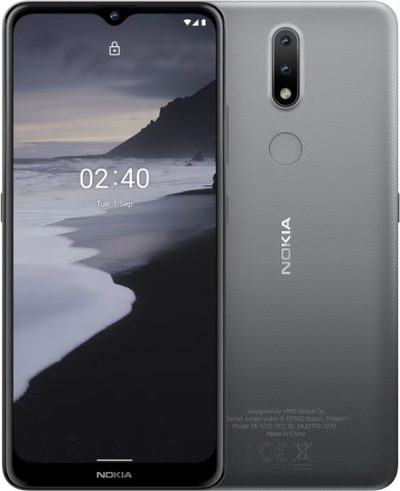
Nokia 2.4
- Technology
- GSM / HSPA / LTE
- 2G bands
- GSM 850 / 900 / 1800 / 1900
- 3G bands
- UMTS 2100 / 850 / 900 - HSUPAHSUPA 5.8HSDPAHSDPA 7.2HSDPA 14.4HSPA+ 21.1DC-HSDPA 42.2
- 4G bands
- LTE bands 1, 3, 4, 5, 7, 8, 20, 28, 38, 40, 41 - 100/50, 150/50 data links
- Dual SIM
- SIM2 supports same bands as SIM1
300 Charge
- Technology
- GSM
- 2G bands
- GSM 900 / 1800
- GPRS
- Yes
- EDGE
- Yes
Nokia 2.4
- Announced
- 2020 Sep 22
- Status
- Available. Released 2020 Sep
300 Charge
- Announced
- 2026, August 21
- Status
- Available. Released 2026, August
Nokia 2.4
- Dimensions
- 165 × 76.3 × 8.69 mm
- Weight
- 189 g
- Build
- Yes
- SIM
- Nano-SIM (4FF)
- Extras
- Haptic touch feedback
300 Charge
- Dimensions
- 136.6 x 55 x 15 mm (5.38 x 2.17 x 0.59 in)
- Weight
- 138 g (4.87 oz)
- SIM
Dual SIM (Mini-SIM, dual stand-by)
Dedicated LED flashlight (on top)
Nokia 2.4
- Type
- Color IPS TFT LCD display, 16.8M colors
- Size
- 6.5 inches
- Resolution
- 720x1600 pixels (~270 PPI density), ~80.9% screen-to-body ratio
- Protection
- Yes
- Touch
- Capacitive multi-touch screen
- Display Notch
- 1-notch
300 Charge
- Type
- TFT
- Size
- 2.4 inches, 17.8 cm2 (~23.7% screen-to-body ratio)
- Resolution
- 240 x 320 pixels, 4:3 ratio (~167 ppi density)
Nokia 2.4
- OS
- Google Android 10 (Q)
- Chipset
- MediaTek Helio P22 MT6762 12 nm
- CPU
- 2 GHz octa-core
- GPU
- PowerVR GE8320 (650 MHz)
300 Charge
- Chipset
- Unisoc SC6531E
Nokia 2.4
- Card slot
- microSD
- Internal
- 64GB 3GB RAM, 32GB 2GB RAM
- Interface
- eMMC 5.1
300 Charge
- Card slot
- microSDHC
- Phonebook
- Yes
- Call records
- Yes
- Internal
- 4 MB 4 MB RAM
Nokia 2.4
- Dual
13.0 MP, f/2.00, 1.0 x optical zoom, BSI CMOS, 1.12µm, PD AF, HDR photo, HDR video, Touch focus, Macro mode, Panorama Photo, Face detection, Smile detection
1.9 MP, f/2.40, Mono CMOS, 1.75µm
- Other features
- single LED flash
- Video
- 1920x1080 pixel
300 Charge
- No
- QVGA
Nokia 2.4
- Single
4.9 MP, f/2.40, BSI CMOS, HDR photo, Face detection, Face tagging, Face retouch
- Video
- 1280x720 pixel
300 Charge
- No
Nokia 2.4
- Loudspeaker
- mono
- 3.5mm jack
- Yes
- FM radio
- FM radio (88-108 MHz)
- Audio features
- Voice speaker, Speakerphone, ANC, HD Voice, VoLTE
300 Charge
- Loudspeaker
- Yes
- 3.5mm jack
- Yes
Nokia 2.4
- WLAN
- 802.11b, 802.11g, 802.11n
- Bluetooth
- Bluetooth 5.0
- Positioning
- Simultaneous GPS, A-GPS, Geotagging, QuickGPS
- Satellite details
- GLONASS (L1OF); Galileo (E1); BeiDou (B1I BeiDou receiver)
- NFC
- No
- USB
- USB Micro-AB USB 2.0
- USB features
- USB charging, USB Host, USB OTG 1.0, USB OTG 1.3, USB PD
- Wireless features
- Wi-Fi Tethering, Wi-Fi Calling
300 Charge
- WLAN
- No
- Bluetooth
- Unspecified
- Positioning
- No
- NFC
- No
- Radio
- Unspecified
- USB
- USB Type-C
Nokia 2.4
- Sensors
- Accelerometer, FP sensor, L sensor, P sensor
- Software
- Voice Command, Navigation software, Intelligent personal assistant
300 Charge
- Messaging
- SMS
- Games
- Yes
- Java
No
MP3 player
Nokia 2.4
- Type
- 4500 mAh battery Li-ion polymer (LiPo)
- Charging
- 5.0 W charging wired
300 Charge
- Type
- 3700 mAh, removable
- Charging
10W wired
10W reverse wired
Nokia 2.4
- Models
- 2.4 Global TD-LTE 32GB
- Price
- A$229
- Market
- AsiaAustraliaEastern EuropeEuropeMiddle EastWestern Europe
- Countries
- Australia, Austria, Belarus +20 more
300 Charge
- Colors
- Green, Sandstone, Black
- Price
- About 50 EUR
How the Nokia 2.4 and 300 Charge differ
- The Nokia 2.4 has a larger battery, 4500 mAh against 3700 mAh on the 300 Charge.
- The Nokia 2.4 has the bigger screen, 6.5 inches against 2.4 inches.
- At launch the Nokia 2.4 was listed at $229 and the 300 Charge at $50 (USD).
- The 300 Charge is the newer of the two, released in July 2026.