The screen is the main reason to look at Apple's new touchscreen MacBook Pro. Apple calls the panel PROLED XDR and describes it as the world's best laptop display. It differs from the Liquid Retina XDR display in the 14 inch M6 MacBook Pro, which Apple introduced on October 27. This feature sets out what Apple says the panel does, and what Apple leaves unstated.
Back to featured
PROLED XDR Is the Highlight of Apple's Touchscreen MacBook Pro
SpexHive Editorial
October 29, 2026
featuredHow the panel compares with the M6 model
| Feature | Touchscreen MacBook Pro (PROLED XDR) | 14 inch M6 MacBook Pro (Liquid Retina XDR) |
|---|---|---|
| Panel | Tandem OLED | Liquid Retina XDR |
| Peak brightness | Up to 2,000 nits, HDR and SDR | Up to 1,600 nits peak HDR |
| Contrast ratio | 10,000,000:1 | 1,000,000:1 |
| Refresh rate | ProMotion, 10Hz to 120Hz | Not stated in the announcement |
| Touch | Sensor built into the panel | Not offered |
| Diagonal size | 14.2 inch and 16.3 inch | 14 inch model |
| Nano texture option | Etched into the cover glass | Optional nano texture |
| Antireflective coating | Standard on the display | Standard on the display |
Tandem OLED explained
Apple's term for the panel is tandem OLED, which uses two layers of self illuminating pixels. Apple says the result is up to 2,000 nits of peak brightness for HDR and SDR content, and a contrast ratio of 10,000,000:1. The 14 inch M6 model uses Liquid Retina XDR with up to 1,600 nits of peak HDR brightness and a contrast ratio of 1,000,000:1. Both sets of figures come from Apple's own announcements.
Why contrast matters
Contrast is the gap between the darkest and brightest parts of an image. OLED pixels can switch off completely, so black areas look truly black. A high contrast figure matters most for dark films, night photos and images with deep shadows. Higher peak brightness helps with HDR video and with working in bright rooms or near windows.
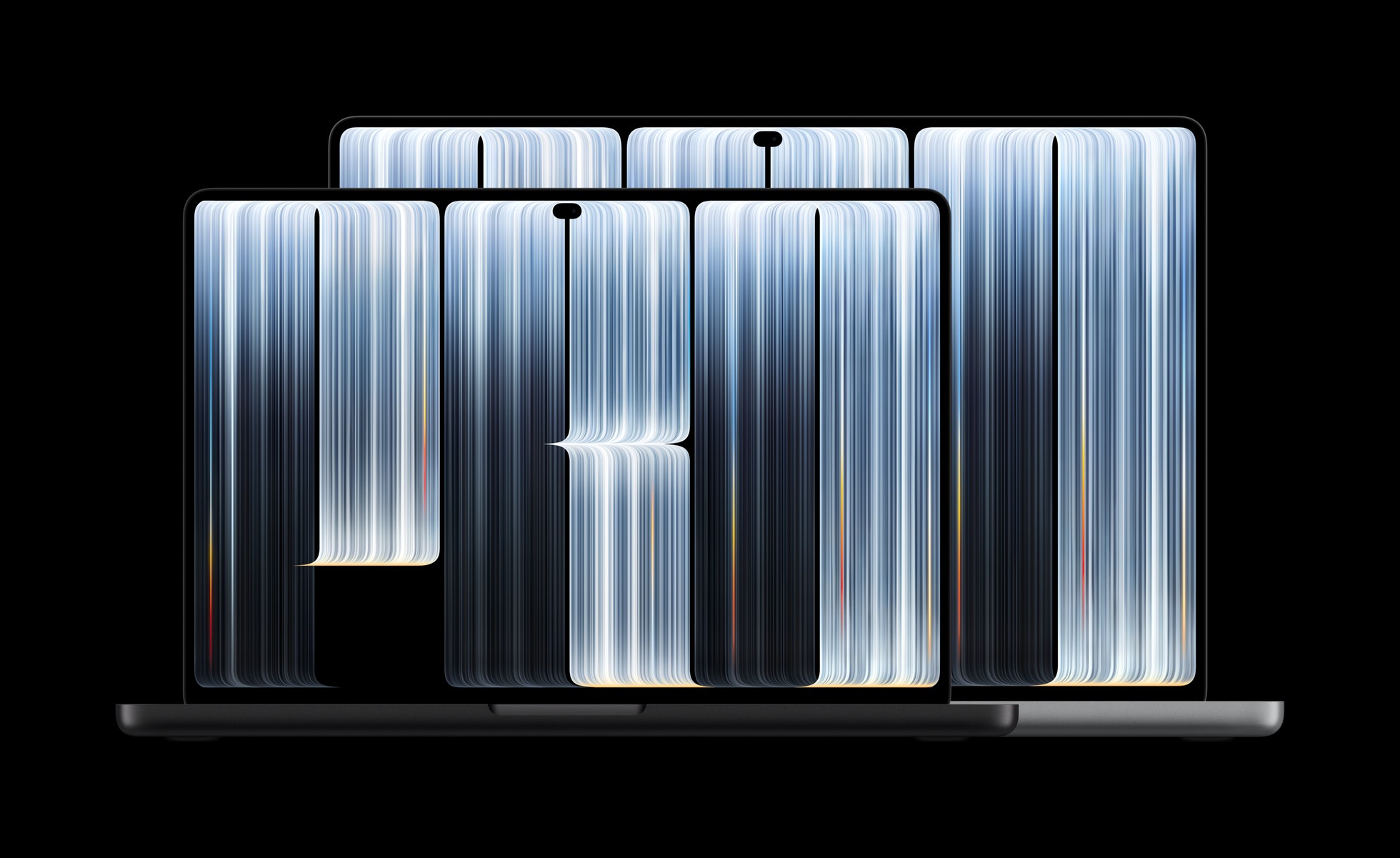
The PROLED XDR display in the 14 inch and 16 inch models. Image: Apple
Color and calibration
The display covers P3 and Adobe RGB in one default preset. Apple says it reaches more than 80 percent of Rec. 2020 coverage, with wider green and cyan coverage, which matters for HDR video editing and color grading. Each panel is factory calibrated, and users can calibrate further with the Apple Pro Display Calibrator. Reference modes cover cinematic, photography, print and design work. DICOM modes support medical image review, for nondiagnostic use only.
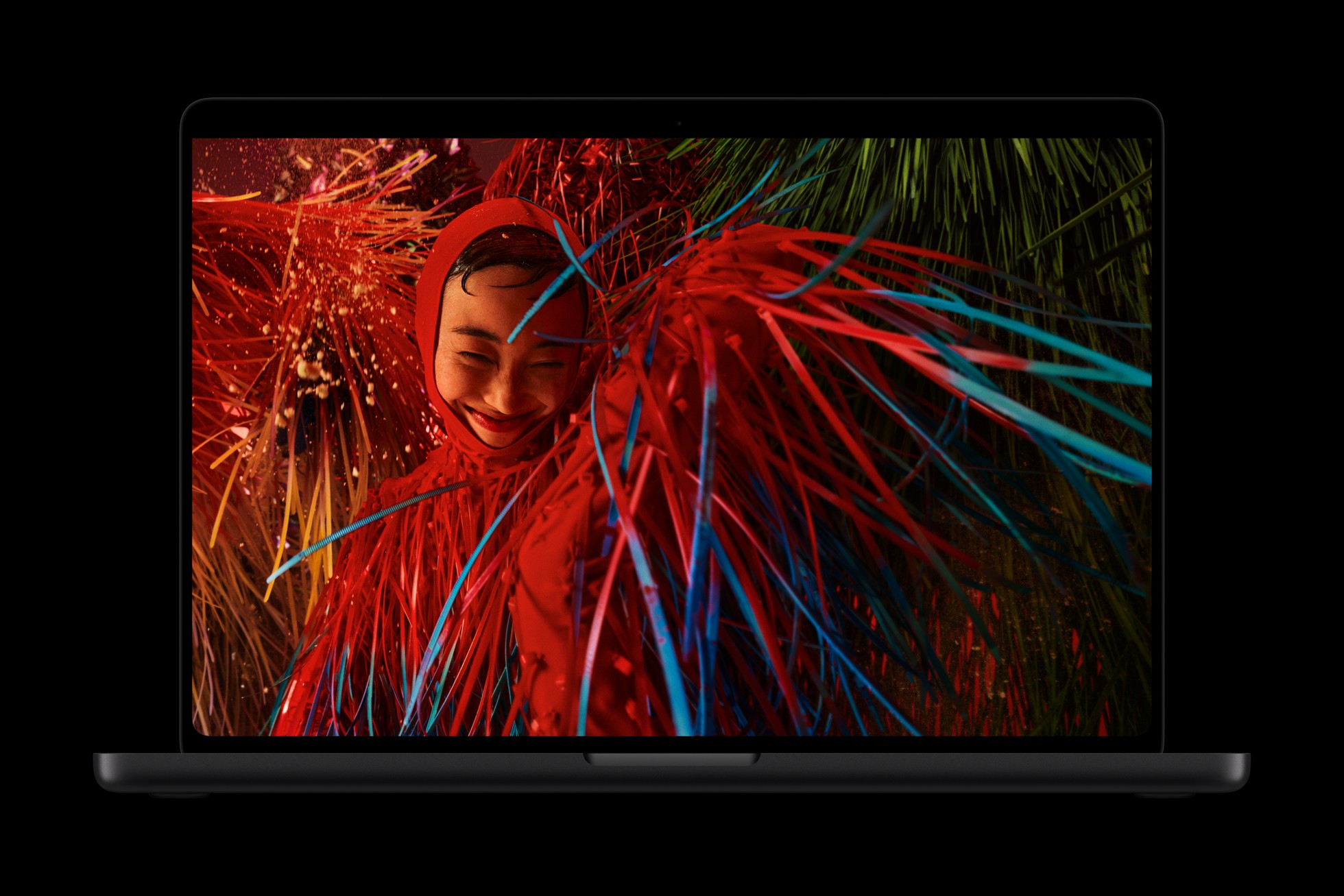
Wider color gamut with P3 and Adobe RGB. Image: Apple
Genlock and matching
The display supports genlock, which keeps the screen's refresh rate in step with a camera's capture. Apple says this reduces ghosting, tearing and other visual artifacts when filming. Apple Color Matching Function 2026 keeps colors consistent with iPhone 18 Pro and Studio Display XDR.
Glare and the nano texture option
The display uses a standard antireflective coating. The optional nano texture is now etched into the cover glass, and Apple says it reduces reflections and glare further. Apple's release does not state the price of the nano texture option.

The display and its anti reflective finish. Image: Apple
Touch on a bright screen
The touch sensor sits inside the display panel, which Apple says reduces latency so the content feels as if you are touching it directly. The hinge is redesigned for stability while using Touch. Apple also says video stabilization smooths the camera feed during Touch video calls.
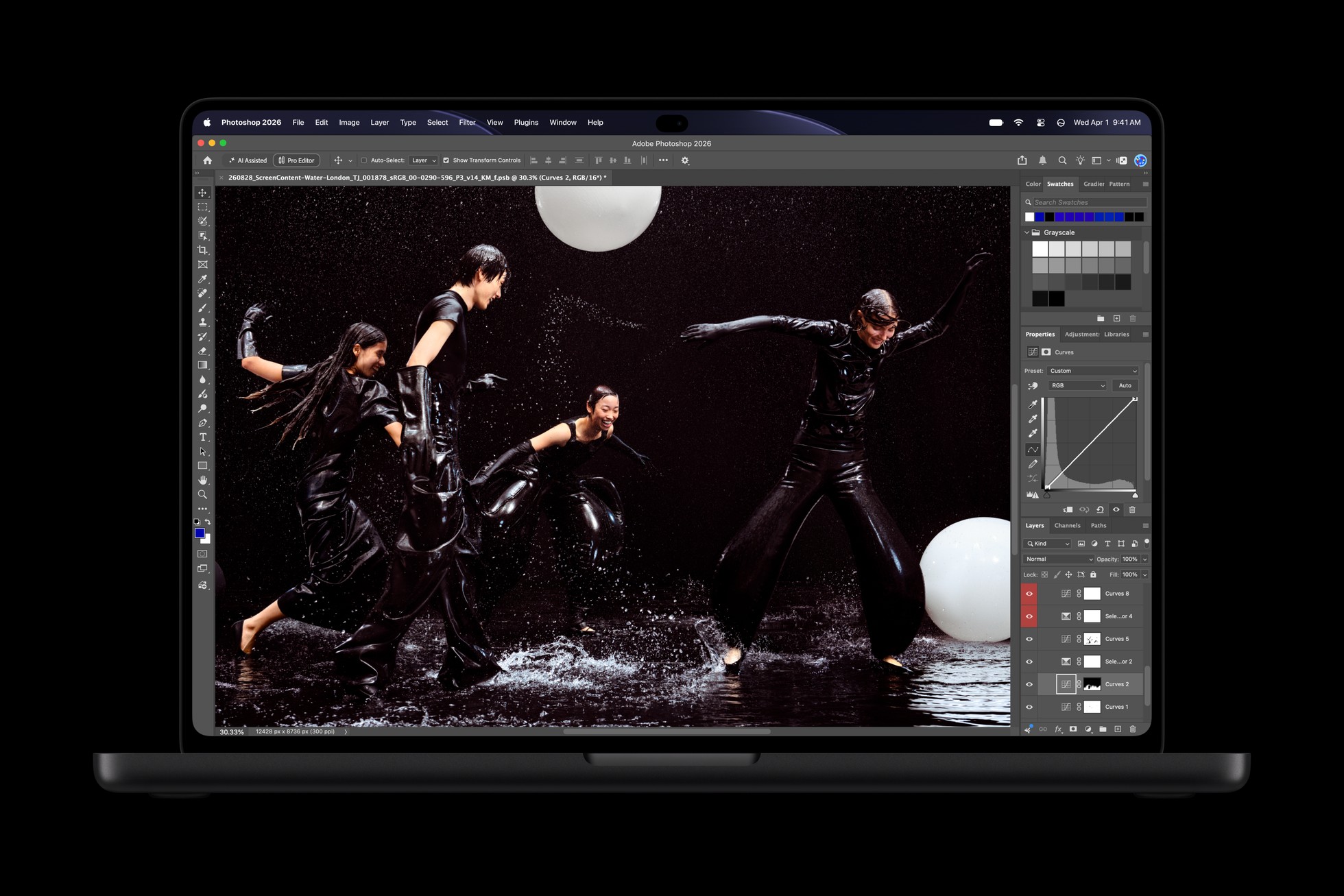
Adobe Photoshop on the MacBook Pro with PROLED XDR Display. Image: Apple
What the release does not say
Apple's release does not give sustained brightness, the display resolution in pixels, or the CPU and GPU core counts for the M5 Pro or M5 Max. It also does not list the price of the nano texture option. Check Apple's MacBook Pro page for full configuration details before you order.
The screen is the main reason to pay more than the 14 inch M6 model, which starts at $1,999. Touch is the feature that is new for the Mac, but the OLED panel is what sets the price apart.
Related Devices & Tags
#PROLED XDR#MacBook Pro#OLED#Display#Touchscreen#Apple
Discussion
You must be logged in to join the discussion.
💬
No comments yet. Be the first to start the discussion!
More featured from SpexHive
- featuredMotorola Signature 27 or Xiaomi 18 Pro: How the Spec Sheets Compare
- featuredThe iPhone Duo Display Problem: What Apple Has Said and What Buyers Should Know
- featuredThis Week in Phones: October 26 to November 1, 2026
- featuredMemory Chips Carried Samsung's Record Quarter While Its Mobile Unit Posted a Loss